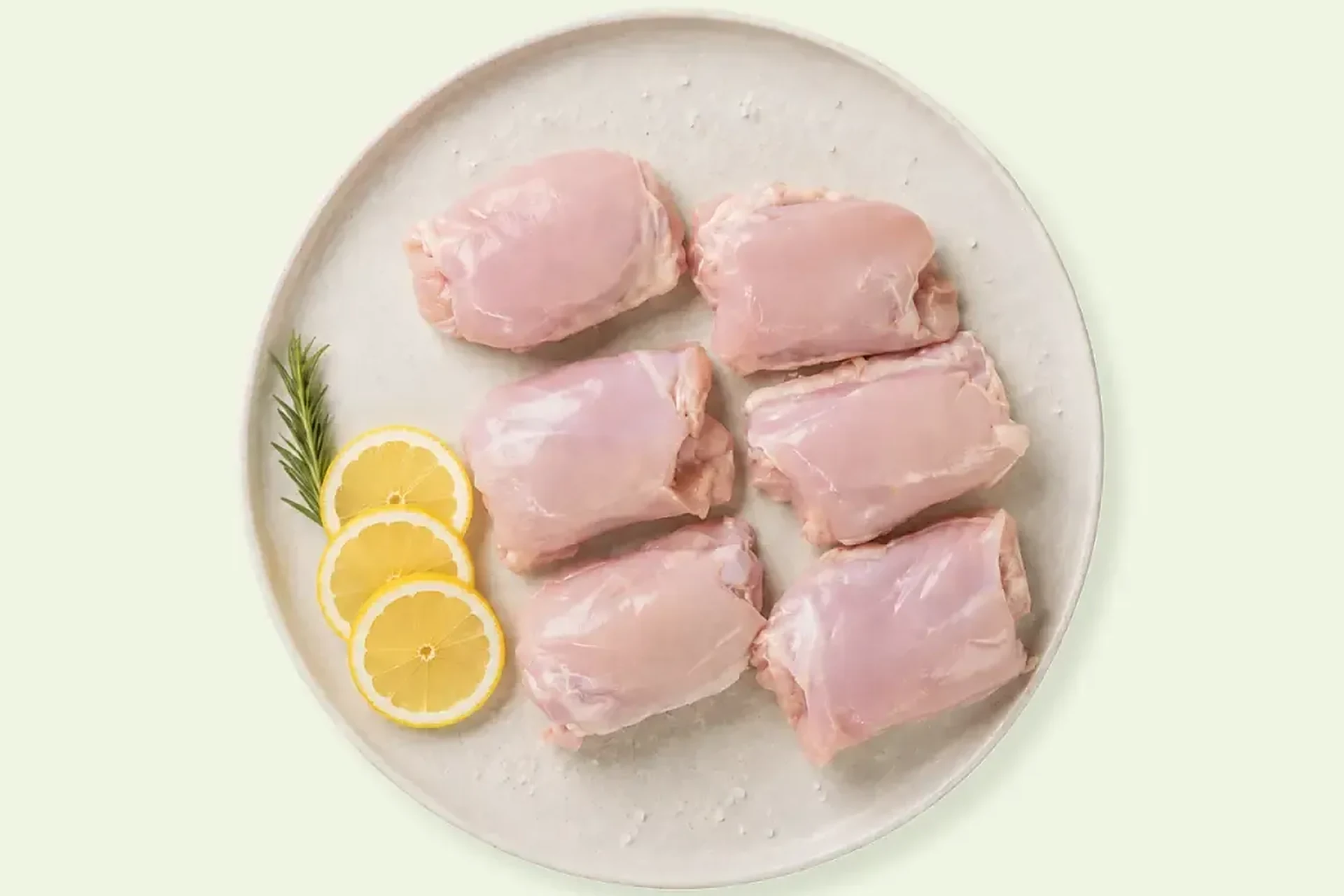
Why Your Chicken Thighs Taste Better at a Butcher Than the Supermarket
9 February 2026•6 min read
Growth rate changes muscle structure
Standard commercial broiler chickens are typically processed at 35-42 days old. Slower-growing or pasture-raised programs commonly run 56-81+ days. That extra time allows muscle fibre to develop more density and the bird to build the intramuscular fat that carries flavour — a fast-grown bird simply has not had time to develop either.
Why thighs show the difference more than breast meat
Breast meat is lean in any chicken, fast-grown or not, so the taste difference is more muted. Thigh meat carries more intramuscular fat and connective tissue to begin with, so a slower-grown bird's additional development shows up clearly — richer flavour, better texture after cooking, and noticeably less of the watery exudate that fast-grown breast meat is known for releasing in the pan.
The processing-to-plate timeline
A bird sold through a direct wholesale allocation is typically processed, packed, and cold-chain dispatched within days, arriving at your door well inside the use-by window. A supermarket supply chain usually involves an additional distribution-centre and shelf-stocking cycle before it reaches a shopper, which is time the product spends refrigerated but not necessarily at peak quality.
Frequently Asked Questions
Is pasture-raised chicken safer to eat than standard chicken?
Both are subject to the same Australian food safety standards. The difference is in flavour, texture, and growth program — not microbiological safety, provided cold-chain handling is correct in both cases.
Why is slower-grown chicken more expensive?
Longer growth periods mean more feed consumed per bird, more time occupying barn or pasture space, and lower throughput per year for the grower — all of which raise the cost per bird compared to a fast-growing commercial breed.
Does cooking method matter more for thigh meat?
Thigh meat is far more forgiving of longer cook times than breast meat because of its higher fat and connective tissue content — it is genuinely difficult to overcook into dryness, which is why it suits braises, roasts, and the BBQ equally well.
Why does chicken thigh price fluctuate more than breast price?
Thigh demand has grown significantly as home cooks favour its flavour and forgiveness, which combined with a fixed supply ratio per bird (every bird yields the same proportion of thigh to breast) creates more price movement than the historically higher-demand breast cut.
Is a whole free range chicken better value than buying pieces?
Usually yes per kilo, since you are not paying for the butchery labour of portioning — it suits households comfortable jointing a bird themselves or using it for a whole roast.
Does organic certification mean the same thing as free range?
No — organic certification relates primarily to feed inputs (no synthetic pesticides or fertilisers in feed crops) and management practices, while free range specifically refers to the bird having outdoor access. A chicken can be one, both, or neither.
Related searches:free range chickenfree range chicken breastorganic free range chickenchicken thigh pricewhole free range chickenfree range chicken near me
Ready to order direct from the source?
Browse the full 160-cut wholesale catalog or ask our butchery concierge a question.