45-Day Dry-Aging vs Wet-Aging: What Really Happens to Your Steak
26 January 2026•7 min read
The shared mechanism: enzymatic tenderisation
Both wet-aging (in a sealed cryovac bag) and dry-aging (exposed to controlled refrigerated air) rely on the same biological process: the animal's own calpain and cathepsin enzymes continue breaking down muscle fibre and connective tissue after slaughter, for roughly the first 10-21 days. This is why even a basic vacuum-sealed steak held for two to three weeks is noticeably more tender than one cooked the day it was cut.
Where dry-aging diverges: moisture loss and concentration
Dry-aging in a temperature- and humidity-controlled room (typically 0-3°C, 80-85% humidity) causes the cut to lose roughly 15-20% of its weight as moisture evaporates over 30-45+ days. That is not a flaw — it is the entire mechanism. As water leaves, the remaining flavour compounds concentrate, and surface enzymatic and mild microbial activity develops the nutty, savoury notes dry-aged beef is known for. The exterior forms a dried pellicle that is trimmed away before cooking, taking a meaningful amount of the original weight with it — which is the real reason dry-aged beef costs more: you are paying for the water that left the building.
Wet-aging retains that moisture inside the sealed bag, so there is no weight loss and no concentrated flavour development — just the tenderising effect, at a lower cost and shorter turnaround (typically 14-28 days).
Which one to choose for which cut
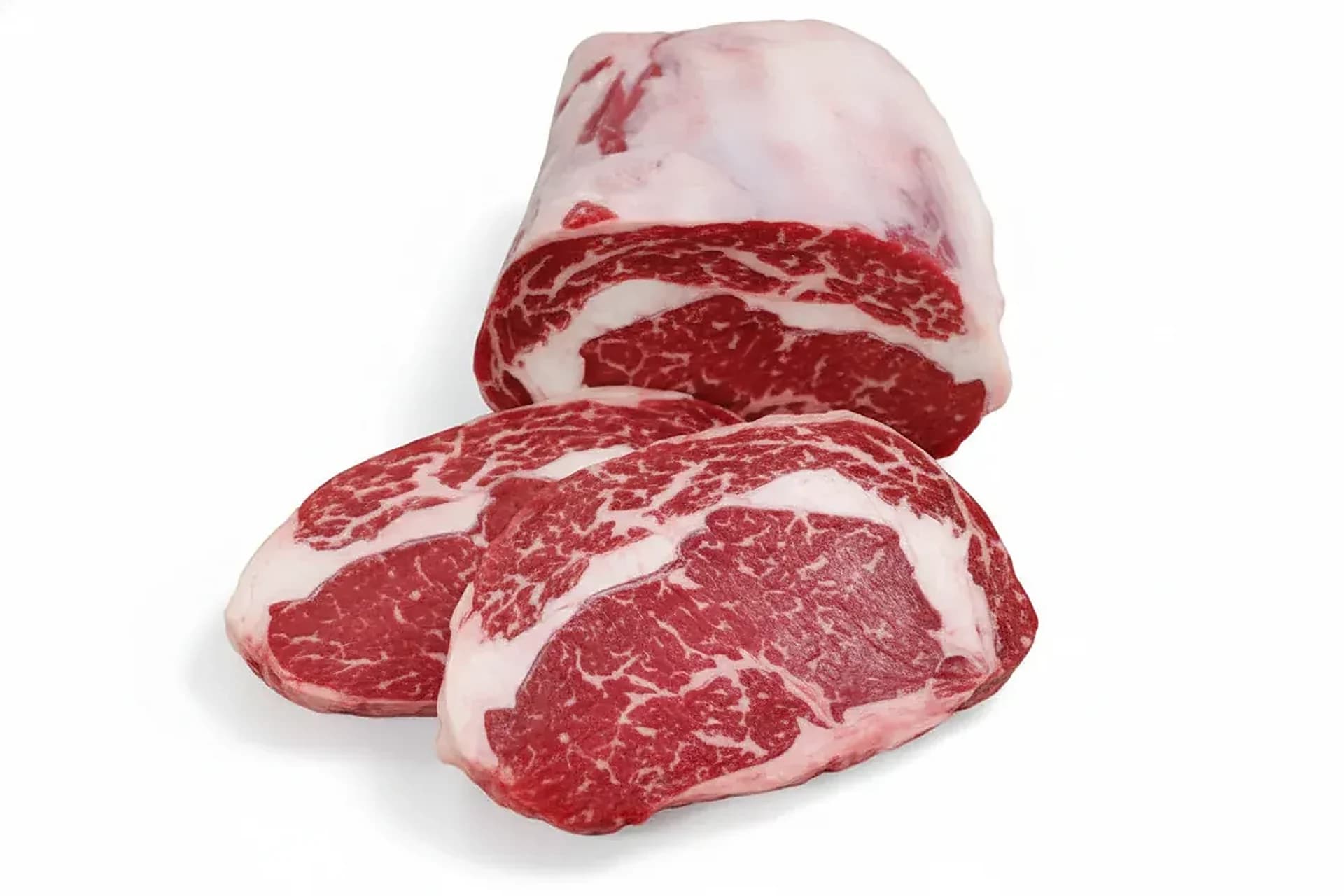
Dry-aging rewards cuts with a reasonable fat cap and enough size to survive trimming — ribeye, sirloin, and whole striploins are the standard choices. Thinner or leaner cuts lose too high a proportion of their mass to trimming to make dry-aging economical. Wet-aging suits leaner cuts and anything destined for a marinade or sauce, where concentrated dry-age flavour would be masked anyway.
Frequently Asked Questions
Is dry-aged beef less safe to eat than wet-aged?
No — commercial dry-aging is done in tightly controlled refrigeration (temperature, humidity, and airflow all regulated) specifically to favour beneficial surface microbial activity over spoilage organisms, and the dried exterior pellicle is trimmed away entirely before the steak is packed.
Why does dry-aged beef cost significantly more per kilo?
Three compounding factors: 15-20% weight loss from moisture evaporation, further loss from pellicle trimming, and 30-45+ days of refrigerated storage space and monitoring tied up in a single cut before it can be sold.
Can I dry-age beef safely at home in a normal fridge?
It is not recommended without dedicated humidity and airflow control — a standard fridge does not hold the stable conditions needed to favour the right surface activity, and the risk of spoilage rises significantly without it.
Does a dry-aged tomahawk need a different cooking method to a fresh one?
The core method is the same (reverse-sear suits its thickness well), but a dry-aged tomahawk benefits from slightly less added fat in the pan, since the concentrated flavour is already strong, and a shorter rest given the lower moisture content.
How long can dry-aged beef be kept once purchased?
Once cut into steaks and vacuum-sealed, treat it like any fresh cut — 3-5 days refrigerated or several months frozen. The aging process itself has already finished by the time it reaches you.
Is dry-aged wagyu worth the combined premium of both processes?
It is the most expensive combination for a reason — you get Wagyu's marbling-driven richness plus dry-aging's concentrated, nutty flavour. Whether it is "worth it" depends on budget, but it is a genuinely different eating experience to either attribute alone.