The Competition Pitmaster's Guide to Choosing a Full Packer Brisket
2 March 2026•7 min read
Why "packer" matters as a specification
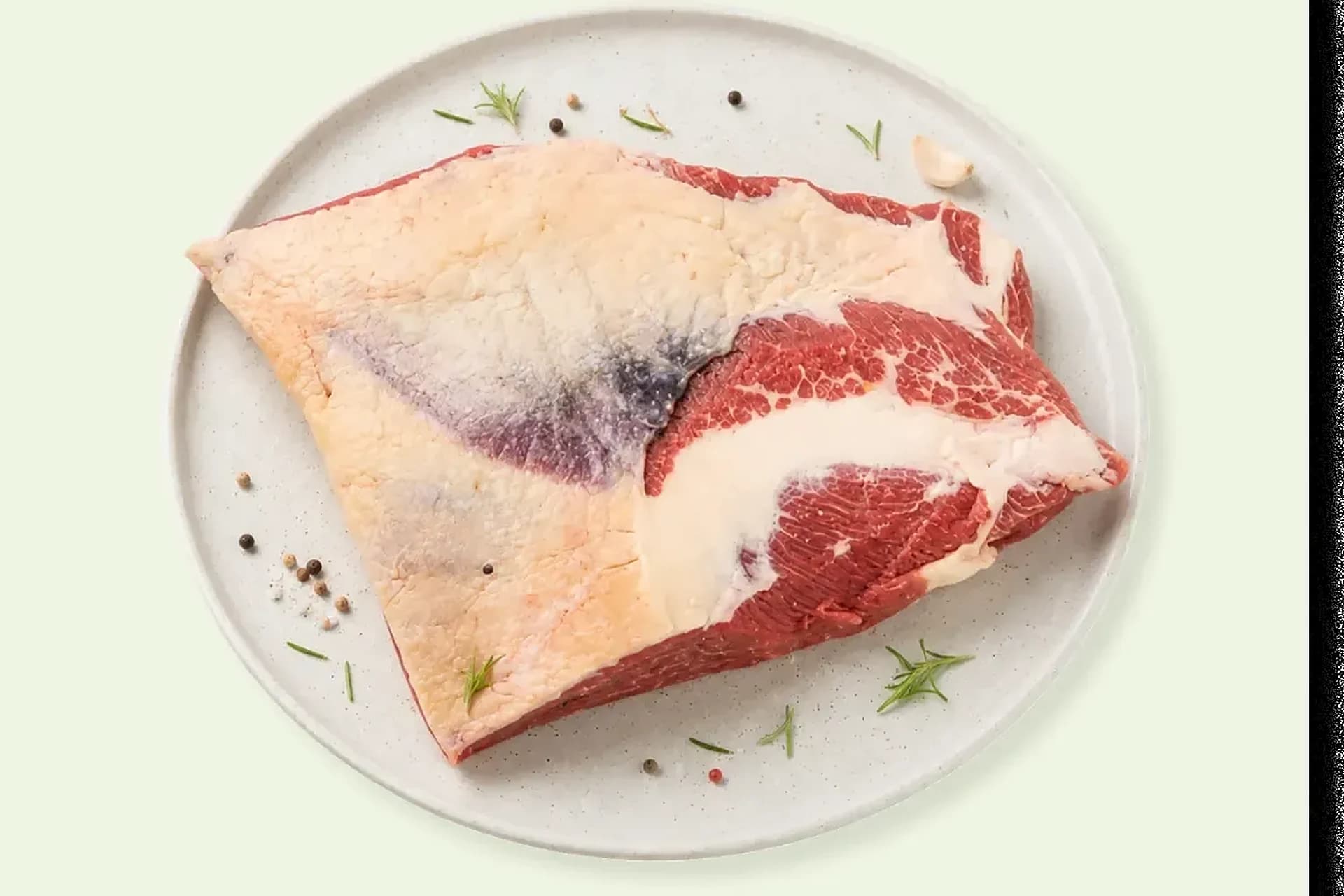
A full packer brisket keeps both the point and the flat intact with the fat cap attached, as opposed to a trimmed flat sold separately — the point's higher fat content and the flat's leaner grain need to render and cook together for the classic competition result. Buying a flat-only cut skips the fat rendering that bastes the leaner flat muscle during a long cook, which is why packer briskets are the standard for serious low-and-slow cooking.
The flex test and what it actually tells you
Picking up a brisket by one end and letting it bend under its own weight is the standard pitmaster check for tenderness potential: a brisket that bends significantly and feels supple indicates good collagen content that will break down well over a long cook, while a stiff, rigid brisket that barely flexes often cooks tougher regardless of technique.
Fat cap thickness: more is not simply better
A fat cap in the 1-1.5cm range after light trimming is the commonly cited competition target — thick enough to protect the meat and render usefully over a 12-16 hour cook, but not so thick that it insulates the meat from smoke and bark formation on that side. An untrimmed fat cap straight from the packer is often considerably thicker than this and needs trimming before the cook, not during.
Frequently Asked Questions
What size packer brisket should I buy for a backyard cook?
A 6-8kg packer feeds a reasonable-sized gathering with leftovers and fits most standard home smokers; competition cooks often go larger (9kg+) because bigger briskets retain moisture better over very long cooks.
How long should a full packer brisket rest after cooking?
A minimum of 1 hour wrapped and rested in an insulated cooler is standard, with 2-4 hours producing noticeably better moisture retention and slicing texture for a brisket of competition size.
Is Wagyu brisket worth the premium for a smoke?
For a long, low-and-slow cook the extra marbling in a Wagyu brisket does translate to a richer result, though the return on investment is less dramatic than it is for a fast-seared steak, since the long cook already develops significant tenderness and flavour on its own.
How does beef brisket price per kg compare between grass-fed and grain-fed?
Grass-fed beef brisket is often priced similarly to or slightly below grain-fed for the same grade, since the premium in brisket pricing is driven more by cut demand and size than by feeding program, unlike with higher-marbled cuts such as scotch fillet.
Should I buy beef brisket online or select it in person?
Buying beef brisket online works well when the supplier states weight, fat cap thickness, and whether it is a full packer or flat-only — the same information you would check in person, just provided up front rather than assessed by eye.
Does a butcher-cut beef brisket differ from a supermarket one?
A butcher sourcing whole primals can select for flex, fat cap evenness, and marbling at the point end, where a supermarket brisket is typically pre-portioned to a standard weight without that selection process applied per piece.
Related searches:butcher beef brisketbuy beef brisket onlinewagyu brisketbeef brisket pricegrass fed beef brisketbeef brisket price per kg
Ready to order direct from the source?
Browse the full 160-cut wholesale catalog or ask our butchery concierge a question.